Back to the lithium battery storage page

Industrial use

Industrial lithium battery storage

Lithium battery storage in industrial environments must organise volumes, charging areas and batteries awaiting inspection without exposing the main building.

Request a technical assessment
Industrial lithium battery storage

Problem addressed by this page

On production, maintenance, internal logistics or energy sites, lithium batteries may be stored, moved or charged close to other equipment. Overcharging, an electrical fault, impact or high temperature can increase the risk of overheating and thermal runaway.

Recommended approach

The aim is to treat lithium battery storage as a dedicated industrial solution rather than a purely documentary requirement. The area should be ventilated, monitored, physically separated from the rest of the activity and sized according to the risk level.

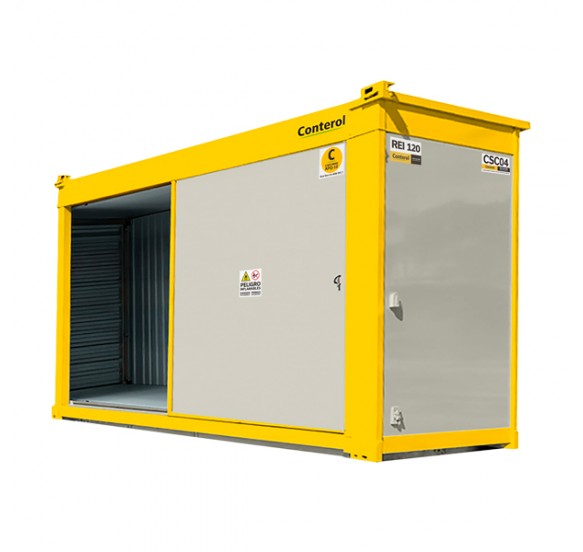
Benefits of the REI120 container

  • Create an independent area for batteries being charged or awaiting inspection.
  • Separate lithium risk from workshops, warehouses and circulation areas.
  • Provide ventilation, fire detection, temperature/humidity monitoring and suppression according to the risk assessment.
  • Adapt capacity using compact, large-capacity or walk-in container groups.

Conterol technical basis

  • Conterol technical sheets indicate fire behaviour assessed according to UNE-EN 1363-1.
  • Lithium battery containers are classified REI 120 according to UNE-EN 13501.
  • Manufacturing is declared compliant with UNE-EN 1090-1:2010.
  • Available accessories include forced ventilation, fire detection, cooling/heating, automatic suppression and lighting.

Related container solutions

Depending on volume, battery condition and site constraints, storage can be based on a compact, large-capacity or modular walk-in range.

Group 01

Compact containers for drums and IBCs

Small volumes, initial quarantine and segregated storage in drums or IBCs.

View details

Group 02

Large-capacity containers for IBCs

Industrial storage for medium or high volumes, at ground level or on two levels.

View details

Group 03

Modular walk-in containers

Walk-in modules for internal handling, inspection and quarantine areas.

View details

Frequently Asked Questions

Isolation reduces the risk of propagation to the main building, production lines and circulation areas in the event of overheating, gas release or fire.

Yes. Charging can increase thermal and electrical risks. A dedicated area makes it possible to integrate ventilation, monitoring and physical separation.

The choice depends on volume, storage format, required access and safety accessories. Compact, large-capacity and walk-in groups cover different needs.

The battery type, stored quantity, condition, charging or packaging format, intended location, access requirements and ventilation, detection or suppression needs should be defined.

No. An REI120 container provides protection and physical separation, but the final configuration must remain linked to the risk assessment, stored volumes and site operating constraints.

Yes. Containers can be configured with forced ventilation, temperature/humidity monitoring, fire detection, cooling, heating or automatic suppression according to project requirements.

Need to secure industrial lithium battery storage?

Conterol can help define the right configuration according to stored volume, batteries being charged, site constraints and risk level.

Request a technical assessment