Group 01
Compact containers for drums and IBCs
Small volumes, initial quarantine and segregated storage in drums or IBCs.
View details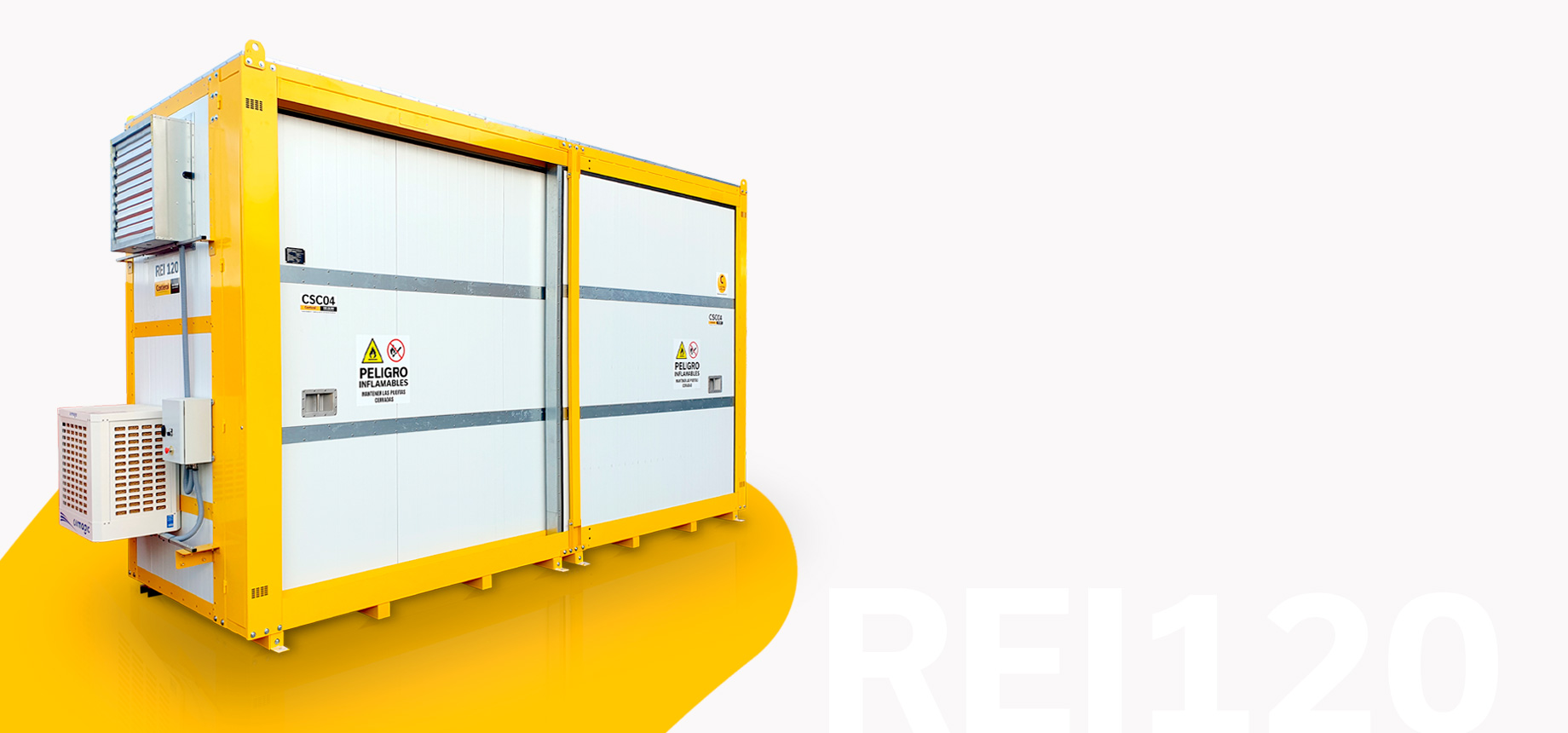
Conterol containers are designed to provide a safe and controlled environment for the storage of lithium batteries, reducing the risks associated with fires, gas release or thermal reactions.
Contact usConterol containers are designed to provide a safe and controlled environment for the storage of lithium batteries, reducing the risks associated with fires, gas release or thermal reactions.
Lithium batteries are increasingly used in many industrial sectors, such as electric mobility, logistics, electronics, energy storage and battery recycling. However, these batteries present specific risks related to the phenomenon known as Thermal Runaway, which can cause intense fires that are difficult to extinguish.
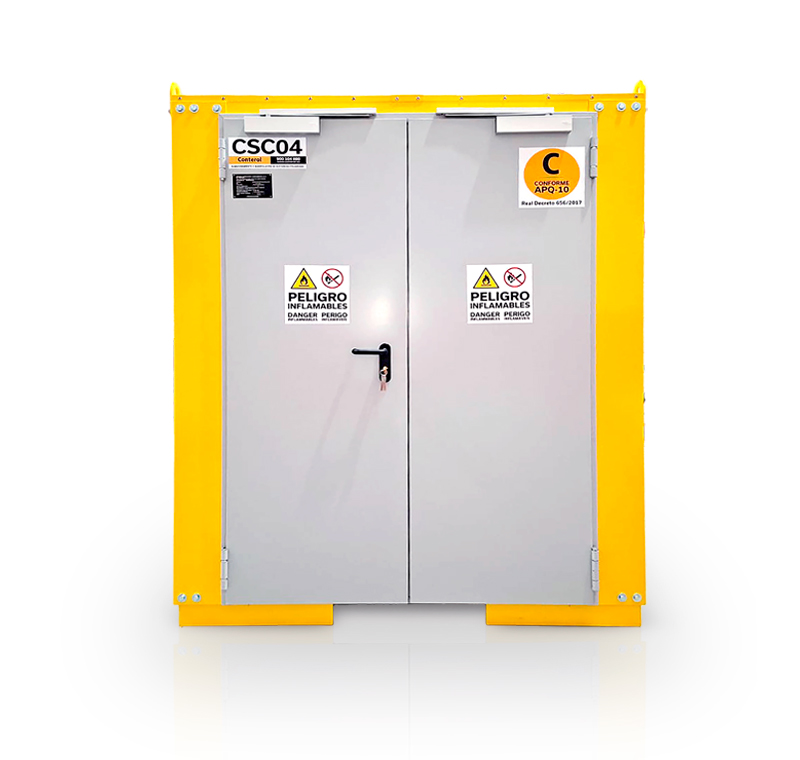
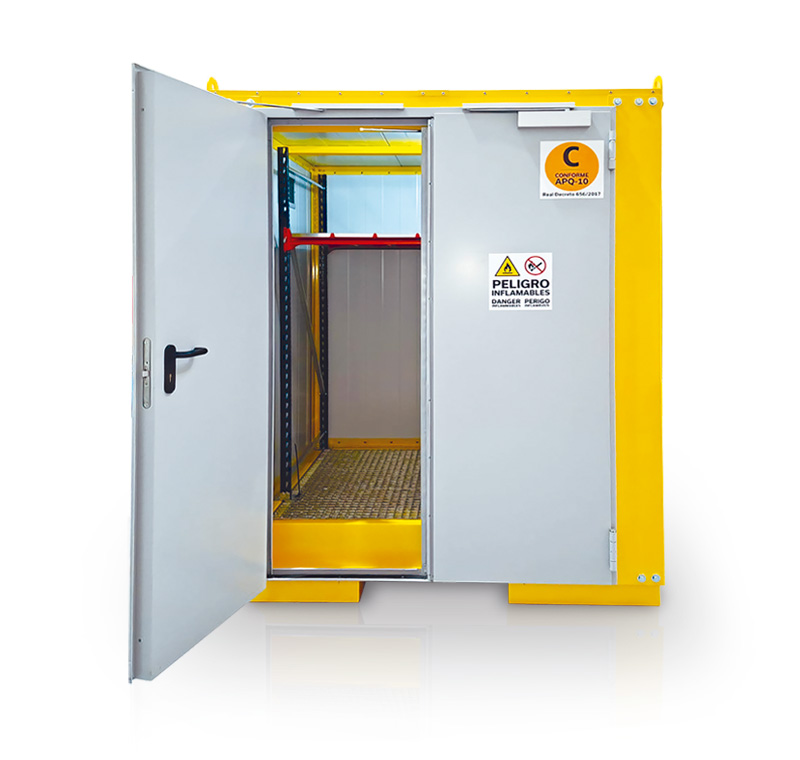
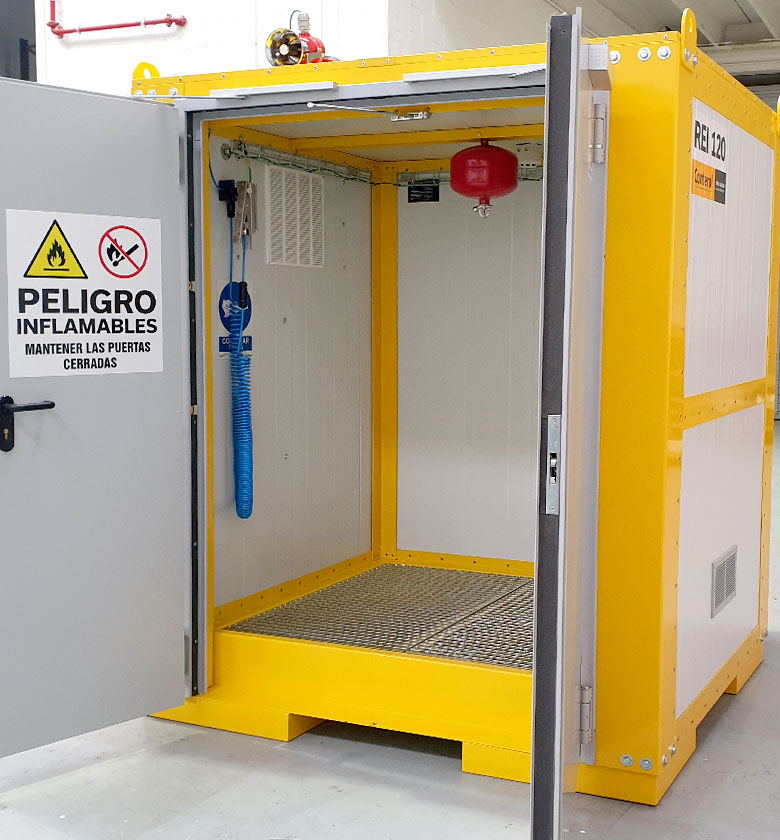
Our containers incorporate fire-resistant structures, ventilation systems, gas control and monitoring systems, helping to limit the spread of fire and protect nearby industrial facilities.
These containers are widely used in logistics centres, industrial facilities, maintenance workshops, battery recycling plants and companies in the energy sector, where lithium batteries need to be stored safely.
Unlike other hazardous products, there is currently no specific European regulation that exclusively governs the storage of lithium batteries in industrial environments.
However, due to the increasing risks associated with these batteries - especially the phenomenon of Thermal Runaway - various technical bodies, industrial associations and insurance companies have developed best practice guidelines for their safe storage.

In Europe, the storage of lithium batteries is usually addressed through:
In Spain, Conterol has actively participated together with BEQUINOR in the development of a technical guide for the safe storage of Lithium Batteries. This guide includes recommendations on:
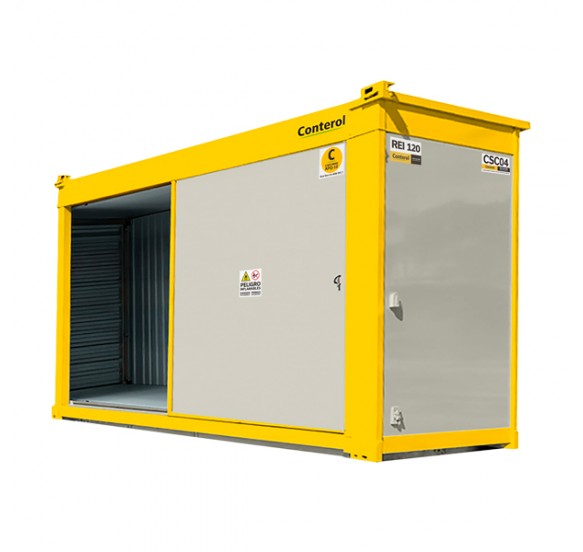
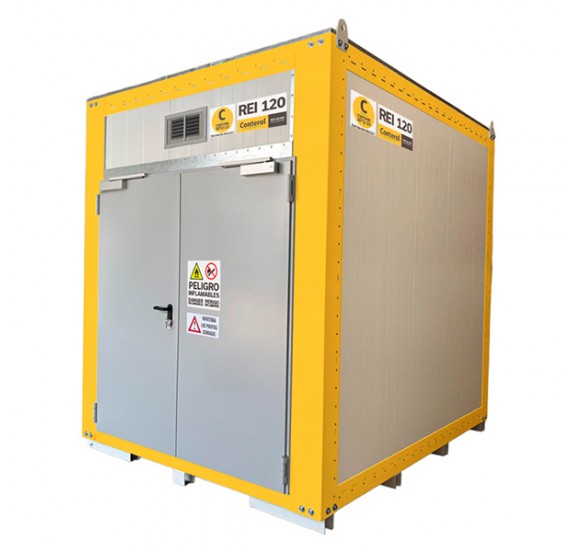
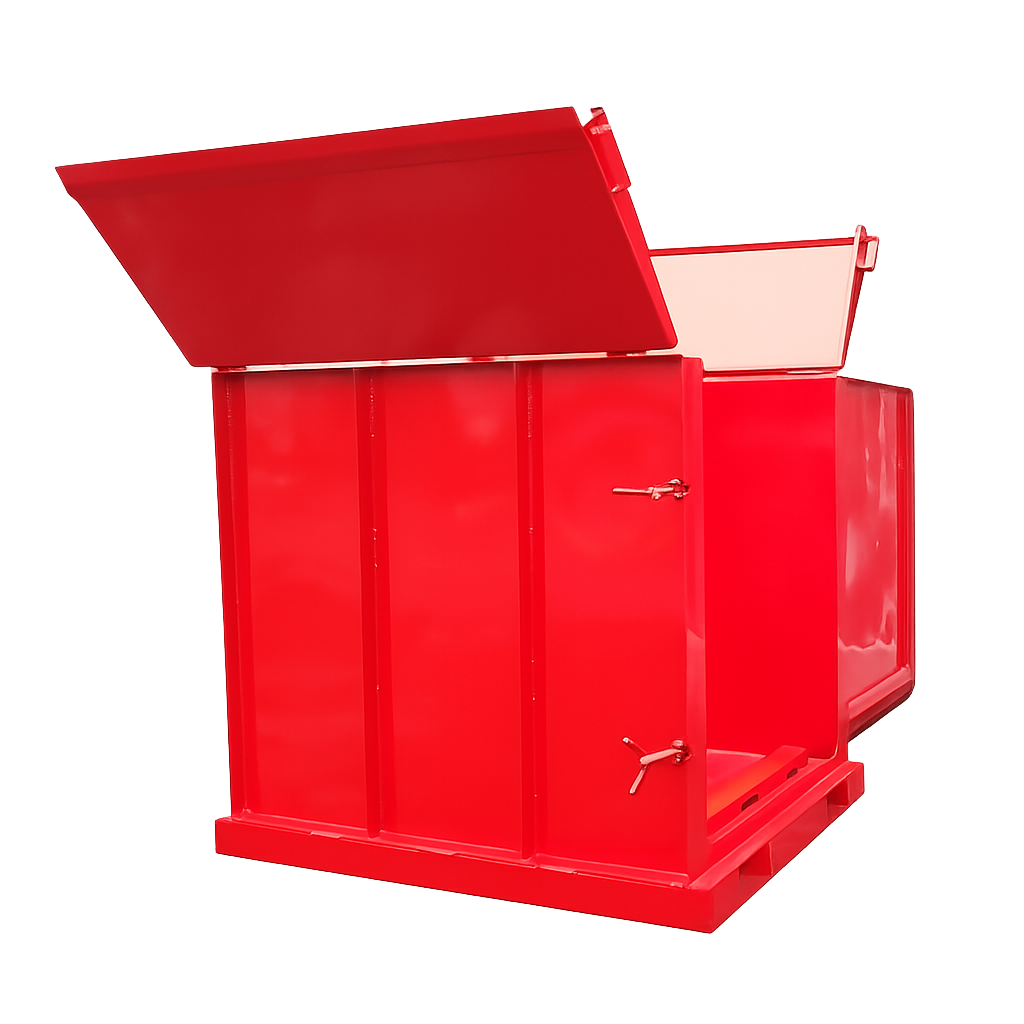
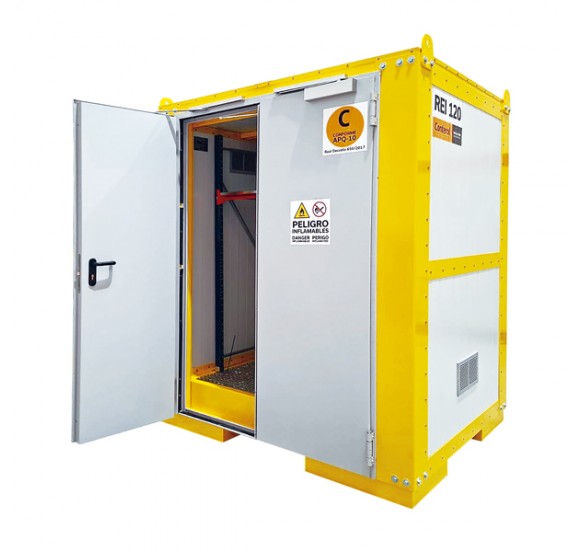
Conterol manufactures REI120 industrial containers for lithium battery storage in controlled conditions. These groups organise the models by capacity, loading format and recommended use.
Group 01
Small volumes, initial quarantine and segregated storage in drums or IBCs.
View details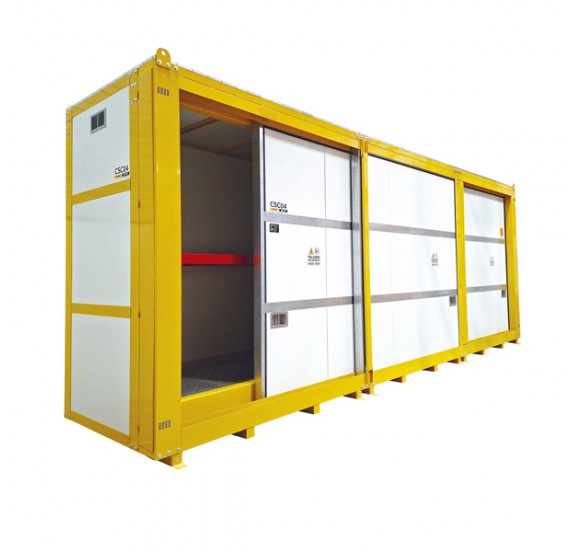
Group 02
Industrial storage for medium or high volumes, at ground level or on two levels.
View details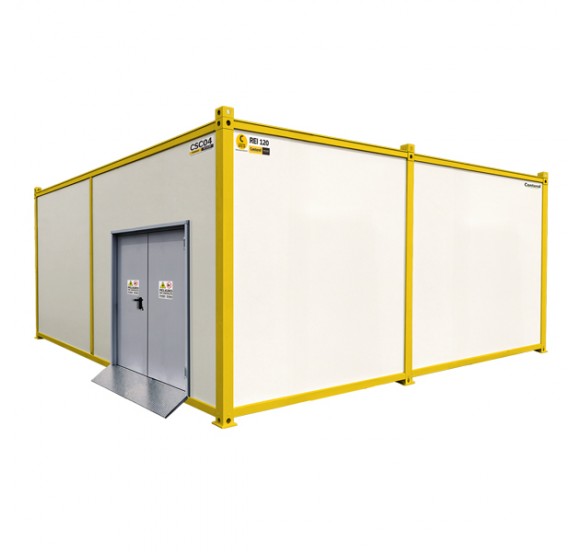
Group 03
Walk-in modules for internal handling, inspection and quarantine areas.
View detailsThese pages cover three priority situations in greater depth: industrial storage, outdoor installation and quarantine of damaged batteries.
Industrial use
Organisation of lithium batteries in industrial environments, including charging areas, monitoring and physical separation of the risk.
Risk separation
Why moving lithium risk away from the main building and creating an independent battery storage area can improve site safety.
Critical batteries
Management of unstable, damaged or withdrawn batteries using a quarantine and risk-isolation approach.
You can also review other Conterol industrial container families.
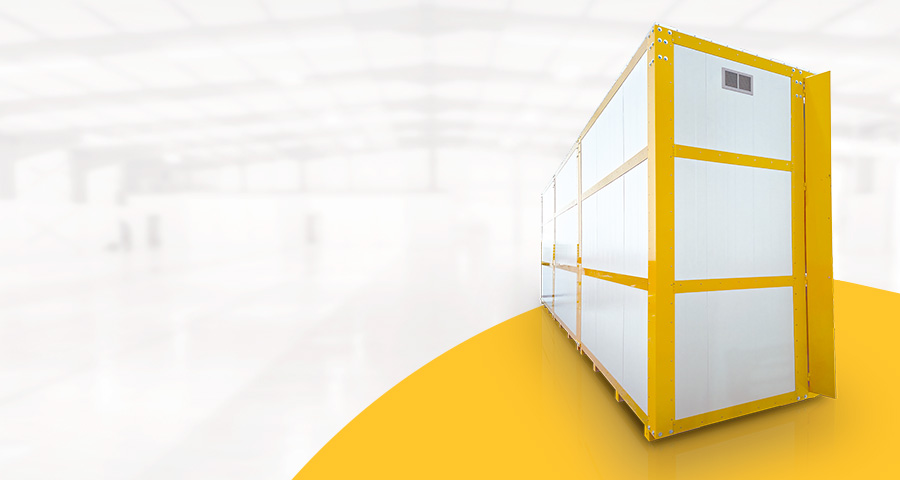
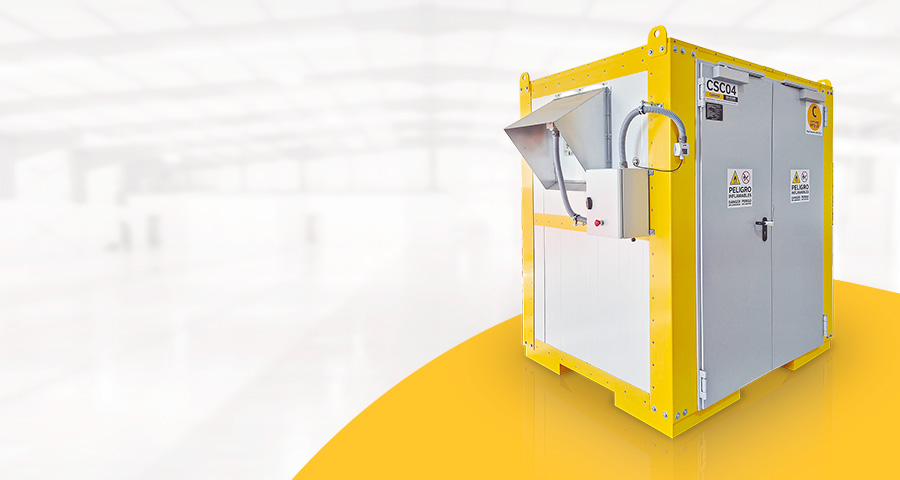
Lithium batteries can become dangerous if they are damaged, defective or exposed to high temperatures. In these situations, they may undergo the phenomenon known as thermal runaway, a chemical reaction that can cause fires, gas release and extremely high temperatures.
Thermal runaway is a chain reaction inside a lithium battery in which heat generation increases uncontrollably. This can lead to fires, the release of toxic gases and a rapid rise in temperature, making lithium battery incidents especially difficult to control.
Yes. Containers for lithium battery storage are usually designed with fire-resistant or fireproof structures in order to limit the spread of fire and protect nearby facilities and equipment.
Yes. Specific containers for lithium battery storage allow for safe outdoor storage, providing protection against fire risks, adverse weather conditions or accidental damage.
Yes. Ventilation systems are essential to evacuate gases released during a battery failure, reducing the risk of gas accumulation or overpressure.
Yes. Containers can be equipped with fire detection systems, smoke detectors, temperature sensors and gas sensors, allowing early detection of possible battery-related incidents.
Yes. Specialised containers can be used for the quarantine storage of damaged, defective or withdrawn batteries, reducing the risk of fire spreading.
Lithium battery storage solutions are widely used in sectors such as electric vehicle manufacturing, logistics and distribution centres, battery recycling plants, renewable energy storage, and the electronics and industrial sectors.
Yes. Containers can be configured with ventilation systems, monitoring, fire detection and different safety accessories, depending on storage needs and the risk assessment.
Choosing the right container depends on several factors, such as the type and quantity of batteries, storage conditions, risk assessment, and safety recommendations and best practices. Consulting a specialist helps ensure a safe storage solution adapted to the applicable regulations.
There is currently no specific European regulation dedicated exclusively to the storage of lithium batteries in industrial environments. However, different technical bodies and industrial associations have developed best practice guidelines for their safe storage. In Spain, Conterol has participated together with BEQUINOR in the development of a technical guide for the safe storage of lithium batteries.
Our specialists can help you design the safest storage solution for your facility.
Contact Conterol to receive technical advice or request a quotation.